The following somewhat rambling quotes/notes relate to the action of the four Lean/Maclean brothers claiming Scottish heritage:
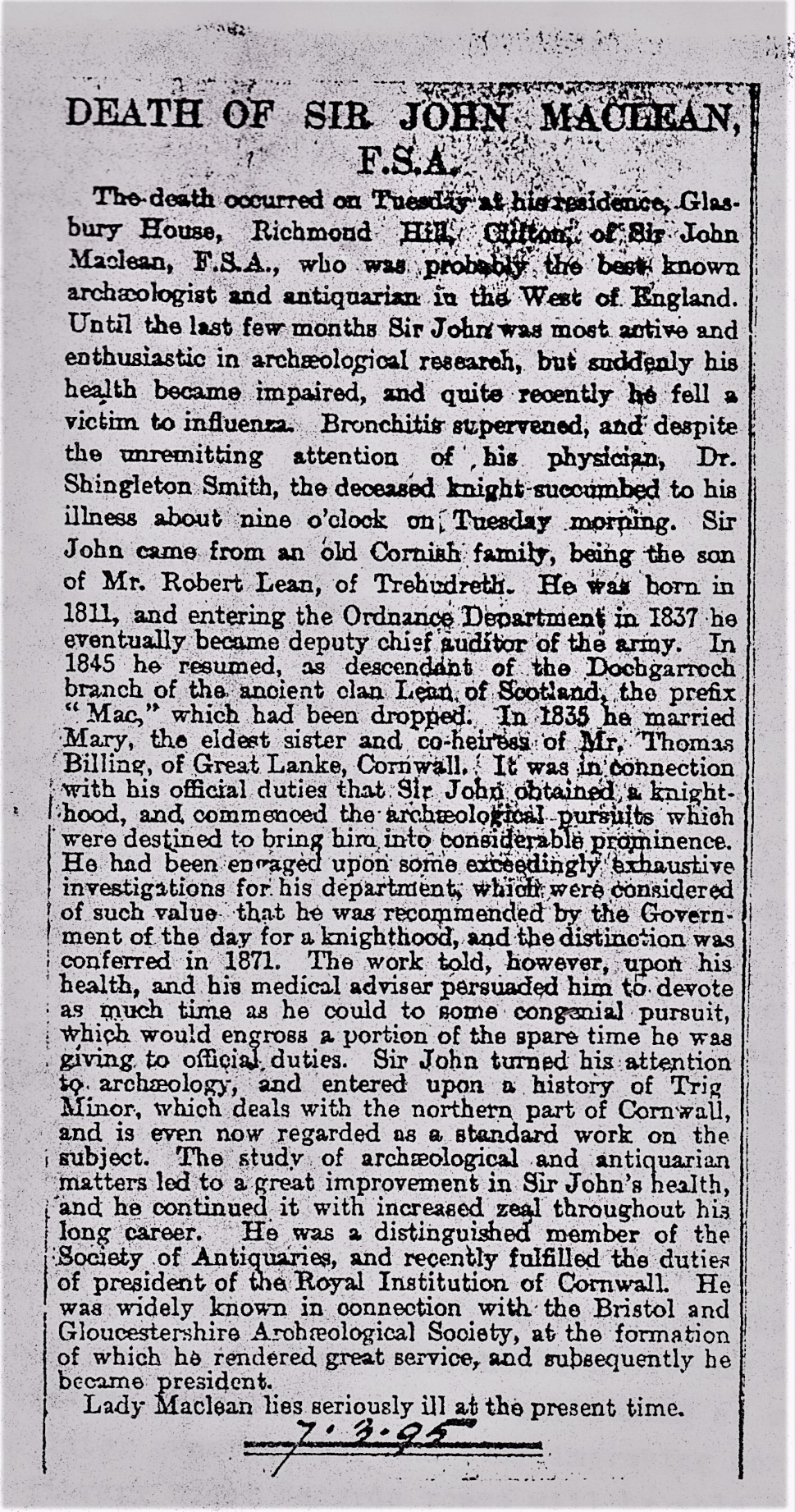
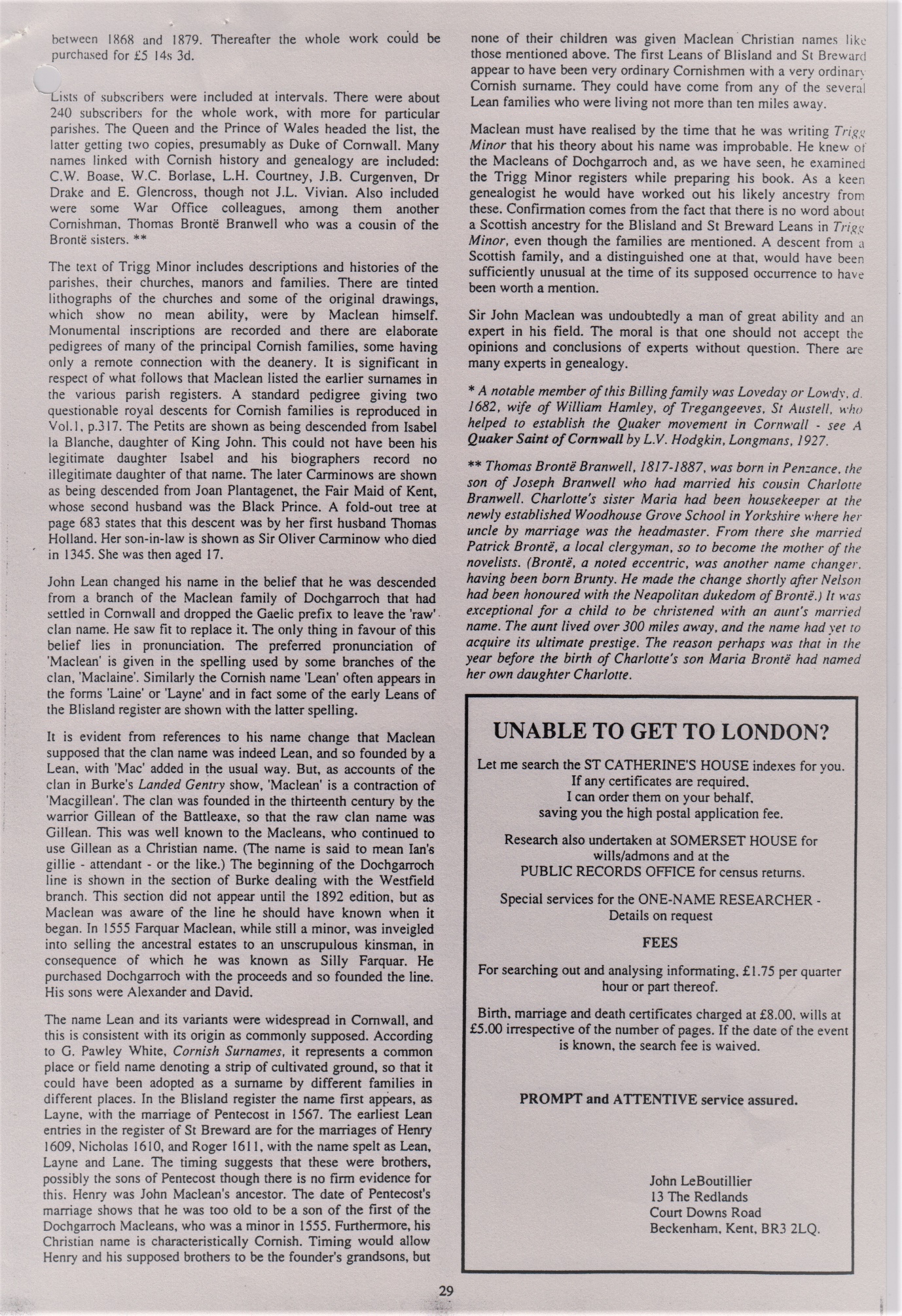
- Extract from an obituary for Sir John Maclean F.S.A (died 6 March 1895):
“The death occurred on Tuesday of ….. Sir John Maclean F S A, who was probably the best-known archaeologist and antiquarian in the West of England……Sir John came from an old Cornish family, being the son of Mr Robert Lean, of Trehudreth. He was born in 1811, and entering the Ordnance Department in 1837 he eventually became deputy chief auditor of the army. In 1845 he resumed, as descendent of the Dochgarroch branch of the ancient clan of Lean of Scotland, the prefix “Mac”, which had been dropped. …. It was in connection with his official duties that Sir John obtained a knighthood (conferred in 1871) …..”.
Unfortunately, the source of this obituary is not known. It was provided to me by a fellow researcher who copied a newspaper cutting, dated 7 March 1895, that he found in the Exeter Public Library in 1994. The full report follows.
2. Extract from the Dictionary of National Biography, Vol 22, Supplement O.U.P. 1960:
“MACLEAN, Sir John (1811 – 1895), archaeologist, son of Robert Lean of Trehudreth Barton, in Blisland, Cornwall, and his wife Elizabeth, daughter of Thomas Every of Bodmin, was born at Trehudreth on 17 Sept. 1811. In 1845, as a descendant of the Dochgarroch Branch of the clan Lean, he resumed the prefix of Mac.”
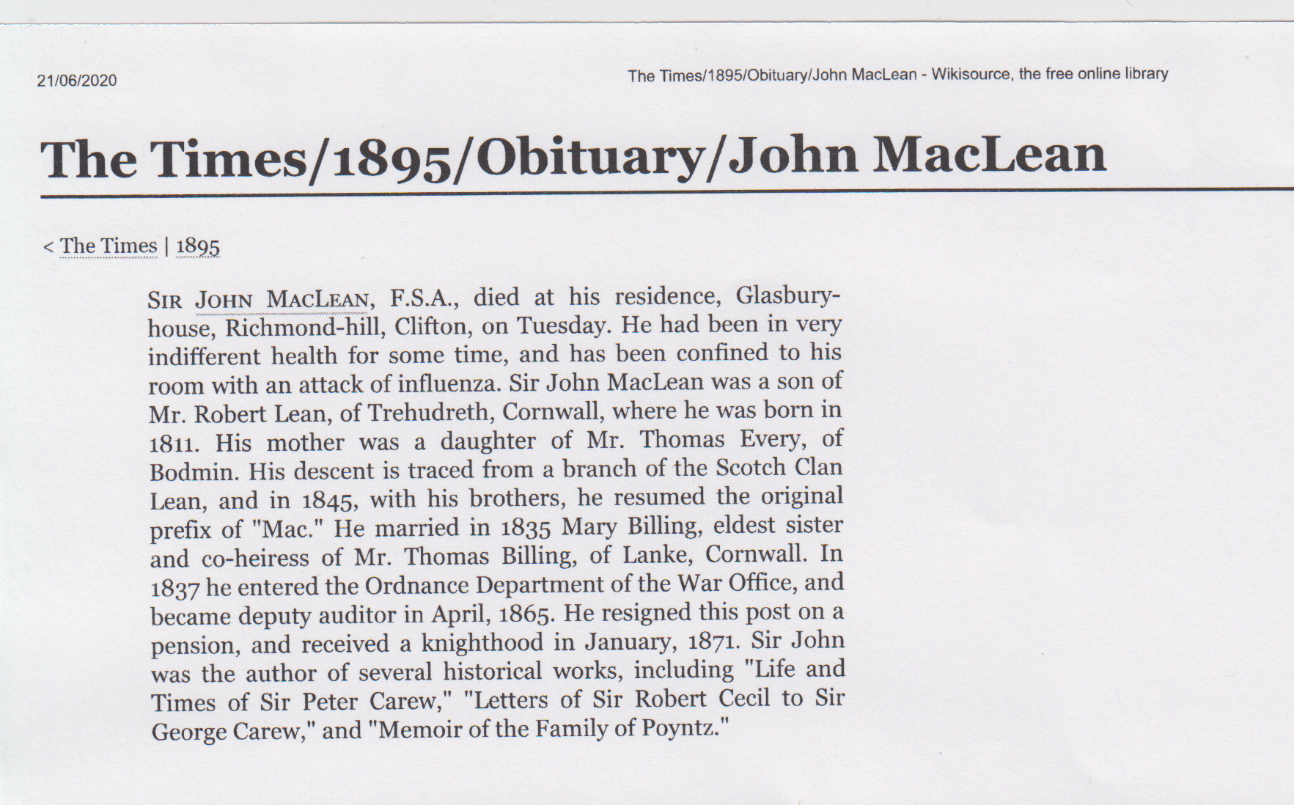
3. Extract from Obituary in The Times, Mar 07, 1895.
His descent is traced from a branch of the Scotch Clan Lean, and in 1845, with his brothers, he resumed the original prefix of “Mac”.
The Lean to Maclean surname change has been cited in a number of other publications and places since Sir John’s death. Some of these are listed below in the section commencing Hearsay Quotes for the Lean to Maclean Name Change.
As many descendants of Benjamin Maclean, who themselves carry the surname Maclean have found to their frustration, there is no convincing evidence that the reason for the name change has any validity. Claims in support of the Scottish connection are summarized in the second edition of “The Macleans of Howick and Tamaki” and centre on competing stories of either an early Maclean escaping Clan feuds in Scotland some time before 1600 or a refugee Maclean hiding out in Cornwall after the failures of the series of Jacobite Rebellions between 1688 and 1746.
The trouble with all these and like claims is one of evidence. In short, there is NO evidence supporting a Scottish forebear. The Blisland and St Breward baptism, marriage and burial records are extremely robust, numerous and hard to refute. With the backing of the Cornish expert, Hugh Peskett, and his carefully documented and researched family record, I concluded many years ago that the four Lean brothers were indeed LEAN’S, of humble Cornish yeoman origin, without a drop of Scottish blood in them. This of course put me at odds with many of my New Zealand relatives who, over several generations, firmly believed in the Scottish heredity, with some over the years even visiting the Maclean Clan headquarters and attending Clan meetings in Scotland and attempting to trace a direct line through Scottish Maclean Clan dignitaries.
Mr Alan Kent of the Cornwall Family History Society
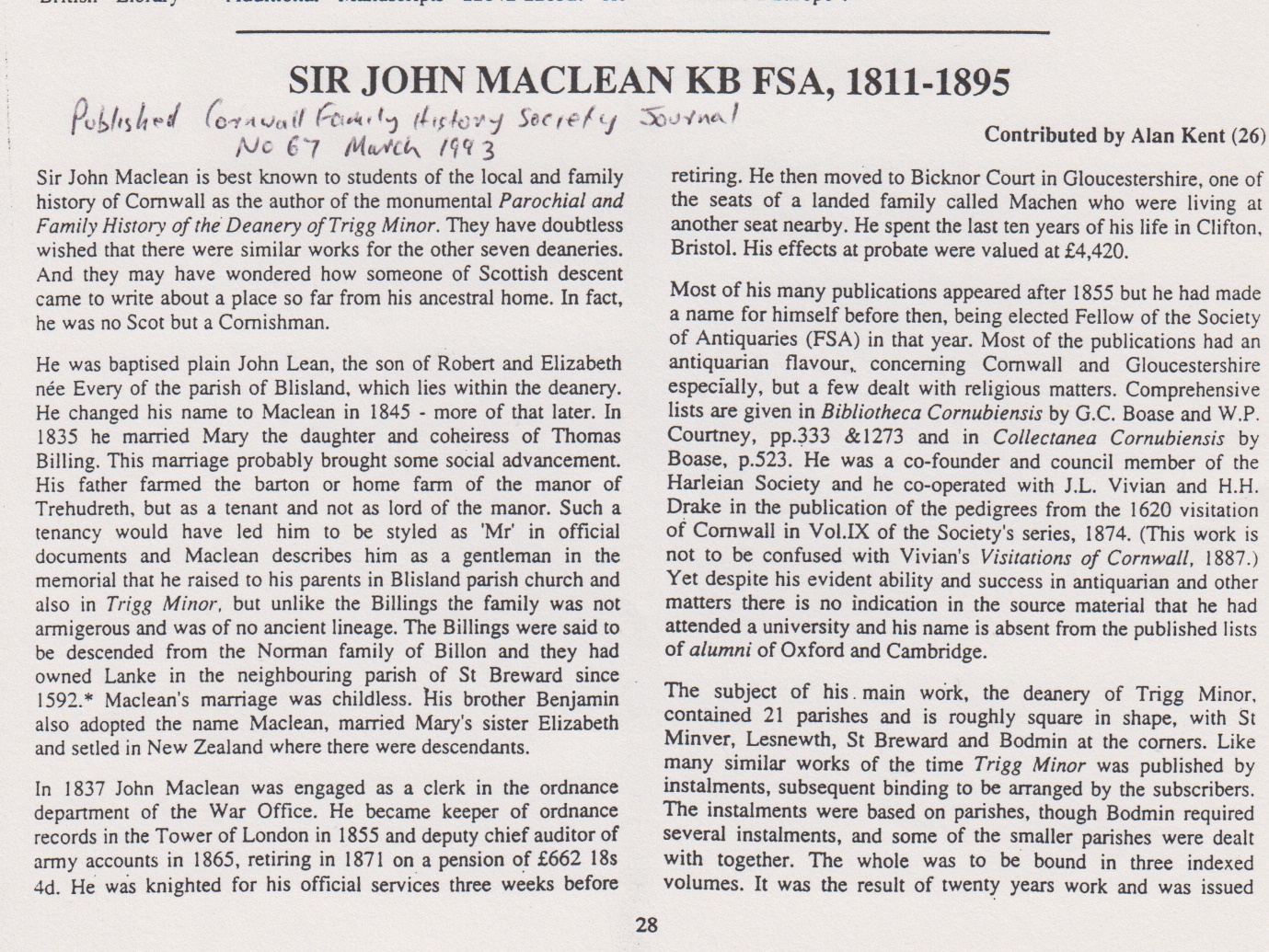
To my mind, this impasse was settled succinctly by another Cornwall genealogy expert, the late Mr Alan Kent, who published a short article “Sir John Maclean KB FSA, 1811-1895” in the Cornwall Family History Society Journal, Number 67, March 1993. This article is published in full below and a summary of the Kent conclusions follows:
“Maclean must have realized by the time that he was writing Trigg Minor [1850s/60s] that his theory about his name was improbable…
“… he examined the Trigg Minor registers while preparing his book. As a keen genealogist he would have worked out his likely ancestry…
“Confirmation comes from the fact that there is no word about a Scottish ancestry for the Blisland and St Breward Leans in Trigg Minor, even though the families are mentioned. A descent from a Scottish family, and a distinguished one at that, would have been sufficiently unusual at the time of its supposed occurrence to have been worth a mention.
“Sir John Maclean was undoubtedly a man of great ability and an expert in the field. The moral is that one should not accept the opinions and conclusions of experts without question. There are many experts in genealogy.”
As stated above, by July 1991 from my own researches, I had reached the same conclusion as Alan Kent. While the families of the four brothers LEAN, later renamed MACLEAN, have, over the years, achieved notable success as families, farmers, professionals, in the Church and as government administrators, the claim of Scottish forebears remains, sadly, unproven. I am just proud of their achievements.
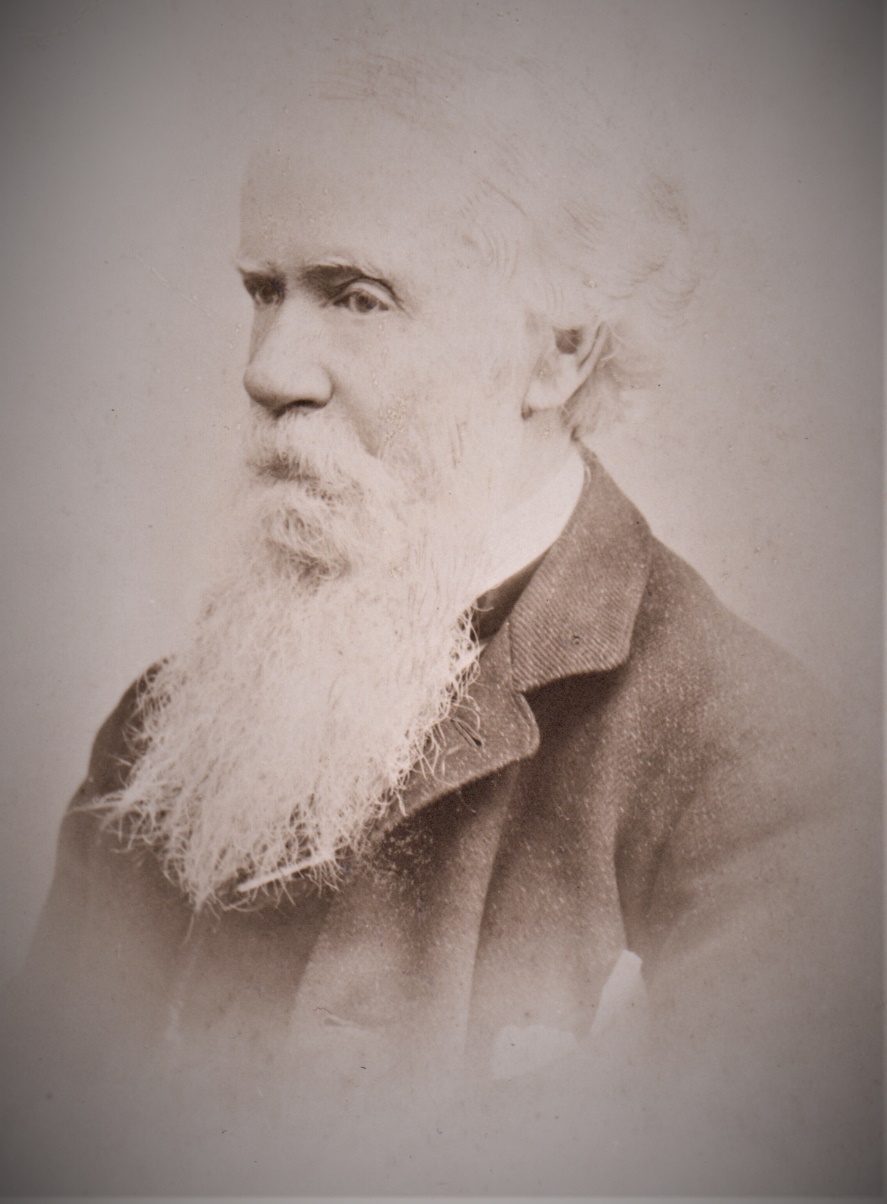
Sir John Maclean c 1870s
Hearsay Quotes for the Lean to Maclean Name Change
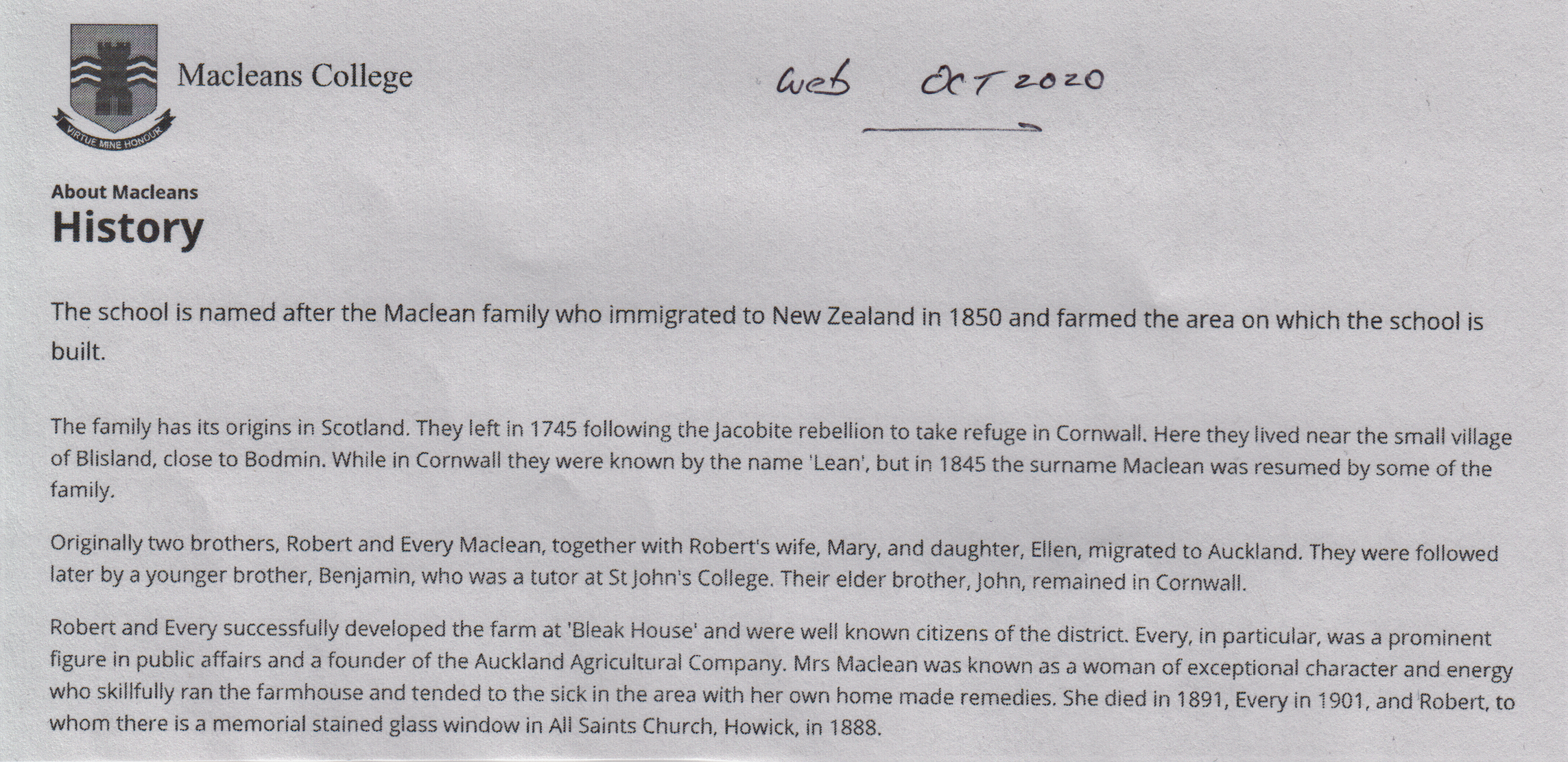
- Macleans College, Bucklands Beach, Auckland, New Zealand
As already intimated, the three Maclean brothers who emigrated to New Zealand from the UK, while having their ups and downs, generally prospered and became well known in the Auckland district.
In 1980, a prestigious school “Macleans College”, newly established at Bucklands Beach, Auckland, was opened, apparently partly on land that had once formed one of the Maclean brothers’ farms.
Unfortunately, ‘on-line’ information from the School’s official website perpetuates the ‘Jacobite rebellion refugee’ myth.
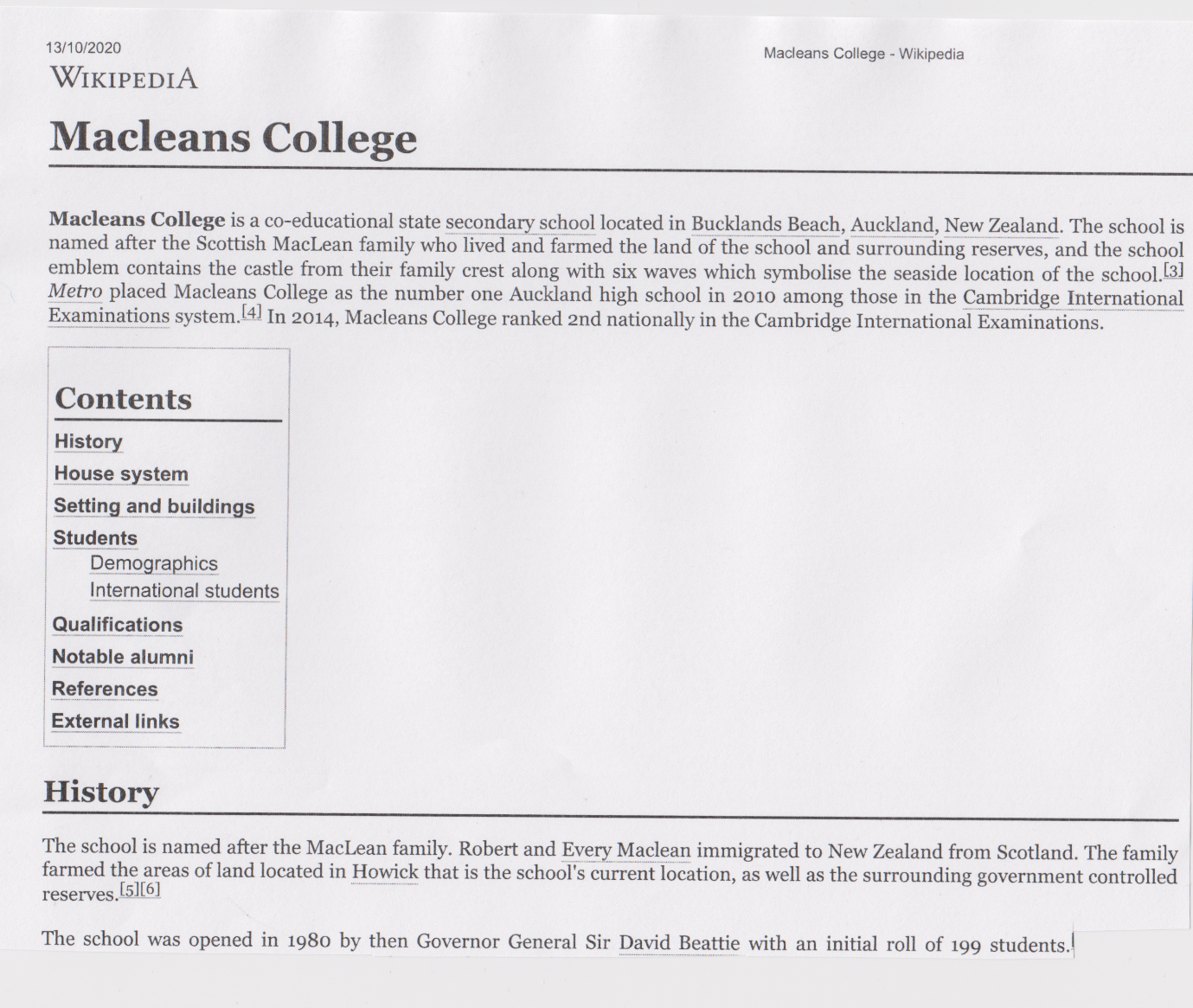
2. Wikipedia
Worse still, according to Wikipedia, “the school emblem contains the castle from their [Maclean] family crest along with six waves which symbolise the seaside location of the school.”
The Wikipedia blurb takes the Maclean myth even further, now we are a “Scottish family” who “immigrated to New Zealand from Scotland” and we have a “family crest”.
As an aside on this educational theme, early this century I came across a book “Seducing Mr Maclean” by Ms Loubna Haikal (from Lebanon), Picador 2002; the Maclean in question being the Dean of a Melbourne medical school where the heroine was studying medicine. It was claimed that the book was all fiction, but you never know, it may have a factual Maclean basis, but I can’t see a likely candidate in my life. Pity!
3. Extracts from official Maclean College New Zealand website and Wikipedia, October 2020
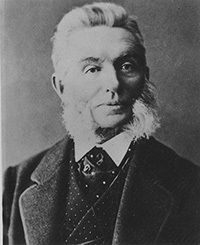
Robert Maclean
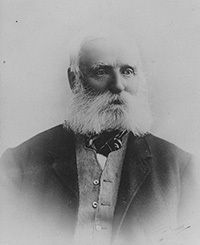
Every Maclean
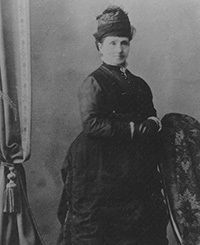
Mary Maclean
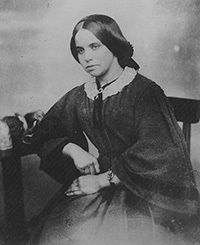
Ellen Maclean
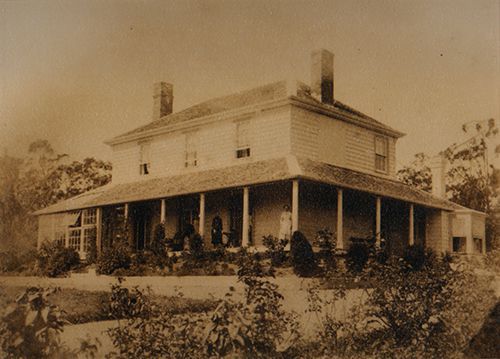
The Maclean Farm “Bleak House”
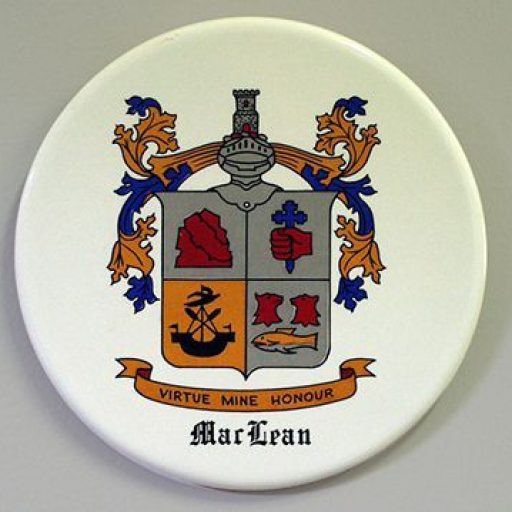
The Maclean Clan Coat of Arms
4. Tina Campbell
A final example of unsubstantiated history comes from my first cousin Christina (‘Tina’) Roberta Campbell nee Maclean, writing to me 15 April 1978:
“Dad [Christopher Whyte Maclean 14.03.1896 – 02.06.1966] said the family were from Isle of Mull the home of the Macleans, but settled in Cornwall for a while for political reasons, which could have been the ’45 [1745] Rising and the reason for dropping the “Mac”. Then reverting when settled in New Zealand.” (Letter in possession of the author)
Legal Issues from the LEAN to MACLEAN Name Change
The 1845 name change presumably initially affected the following 13 LEANS:
The four brothers John, Robert, Benjamin and Thomas Every LEAN.
The three Lean brothers’ wives Mary nee BILLING (John’s wife mar 1835), Elizabeth Ann nee BILLING (Benjamin’s wife mar 1839) and Mary Evans nee VOSPER (Robert’s wife mar 1837).
The four brothers’ children born before 1845:
Robert’s daughter Ellen Jane LEAN, born 1838
Benjamin’s children Mary Elizabeth Kate Billing Lean, born 1840, Edith Louisa Lean, born 1841, Benjamin John Lean, born 1842, Alexander Henry Lean, born 1844 and Christopher Haydon Lean, born 1845.
John and Thomas Every had no children in 1845. Benjamin had 6 more children to come, all of whom were baptized with the surname MACLEAN.
The three wives, who in those days had about the same legal rights as a domestic cat, would have automatically taken on the surname ‘LEAN’ on their marriage and ‘MACLEAN’ when their husbands changed their surnames.
From this distance in time, there seems no great significance about 1845 being the year of name-change if, indeed, this was the case. I have seen no contemporary evidence or documentation that 1845 was the year of change.
Notwithstanding, 1845, in terms of what the other LEANS living in the Blisland and surrounding Parishes might think of the name change (eg there’s that Trehudreth lot putting on airs and graces), it was probably a very opportune time as all 13 of the people involved seem not to have been living in Cornwall in 1845. And, it would seem, they never returned to live in Cornwall. And [my conjecture] as John and Benjamin, and probably Robert, had married above their station in life, their wives probably welcomed the name change.
Or maybe in 1845 being of Scottish ancestry was seen as a desirable thing as a result of the writings of Sir Walter Scott. Further, Prince Albert and new wife Queen Victoria first visited Scotland in 1842. They also stayed in Balmoral Castle in 1848 and the Prince bought it for Victoria in 1852. Scotland was clearly trendy.
Or to give him the benefit of the doubt maybe John, later to be Sir John, in his job at the Tower of London, had found some snippet of information that led him to believe that, before the system of Anglican church Registers of baptisms, marriages and burials had commenced in the 1500s, he had a Scottish renegade ancestor who settled in the Blisland and St Breward region of Cornwall and bred with one of the local beauties. A very slim chance, but just maybe!
Trouble is no one else has, not even remotely, discovered that piece of information and John left no record of his claim of Scottish forebears.
When Did Robert and Every MACLEAN migrate to New Zealand?
Discussion of the Lean/Maclean name change is further clouded by unsubstantiated dates of when Robert and Thomas Every emigrated to New Zealand
A book with the title “Brett’s Historical Series Early History of New Zealand” Published by H Brett, Auckland in MDCCCXC [1890] has come down through the family to me.
Inscribed on the inside cover page is the following hand-painted colourful inscription:
Star Christmas Competition
1891
Prize Story
Second Prize
Mrs Maclean
Te Uhi, Tanpiri
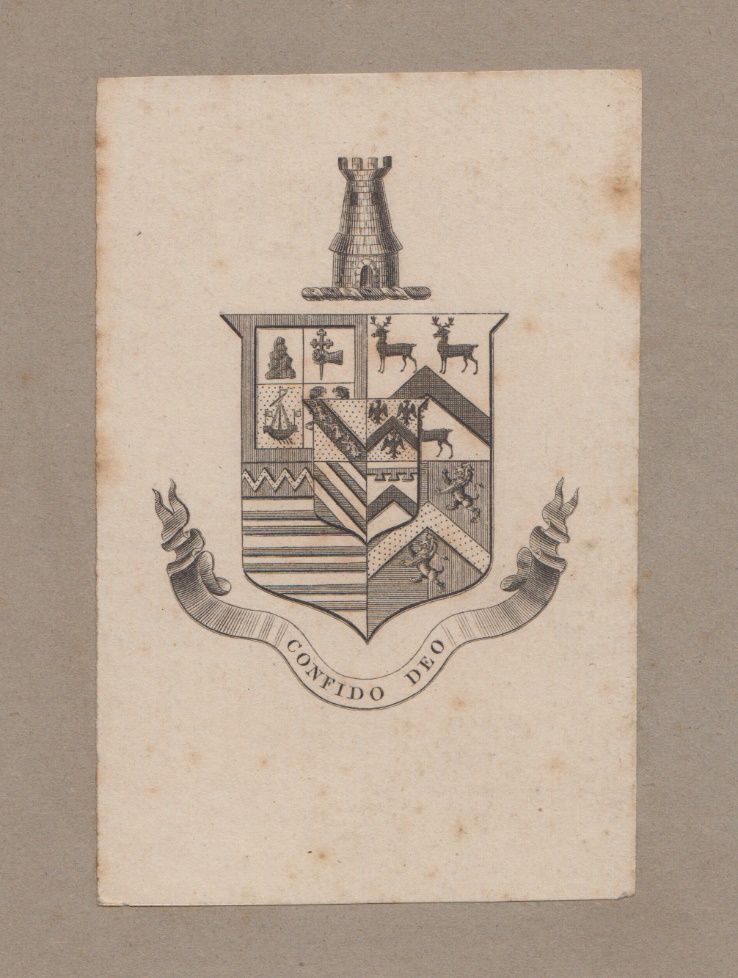
I believe the Mrs Maclean referred to is Mrs Jessie Jones Maclean, wife of Benjamin John Maclean, my grandfather. Pasted on the inside cover is a small Maclean coat of arms (copied below). More of this later.
At the end of the book is an extensive section titled:
“An Alphabetical List of the Founders of the British Colony of New Zealand – Commencing January, 1840, Ending December, 1845.”
Included in the extensive list, for 1841 (sic), are: “Maclean Robert and Maclean Every, locality Tamaki, Auckland”. There is no mention of Mrs Mary Maclean or her daughter Ellen Maclean (presumably female non-persons!).
Where available, the list includes the name of the pioneering ship on which the early settlers came. No such ship is included for the two Maclean brothers. Not surprising as the Robert and family and Thomas Every did not come to New Zealand until 1850. This little “white lie” has been repeated elsewhere.
Obviously, in 1841 Robert and Thomas Every still bore the surname Lean, and as such would not have been recorded in shipping records of the time as surname Maclean.
And another example from: “The Cyclopedia of New Zealand (Auckland Provincial District)”, The Cyclopedia Company Ltd, 1902 Christchurch.
“The HON. EVERY MACLEAN, some time of Bleak House, Howick, Auckland, was born in Cornwall, England, in 1819, and came to New Zealand, along with his brother, the Late Mr Robert Maclean, by the ship ‘Constantinople’ in 1840.”
The New Zealand newspaper The Southern Cross of the 21st of May 1850 carried the usual passenger arrivals and departures and lists of imports and exports under the banner SHIPPING LIST. Under the sub-heading “Arrivals – Foreign” is the following:
“May 17 – Barque ‘Constantinople’, 317 tons, Capt. Young from London, Dec 28 [departure date from London]. Passengers – Mrs Holland, Mr Ridings, Mr & Mrs Nolan and family, Messrs Finn, Gordon, McLean and Roberts, Mrs Jennings and son, Mr and Mrs McLean and daughter. Brown and Campbell agents.”
These seems general agreement between researchers, with the evidence of other writings about the Macleans in New Zealand, that:
The first McLean name is Thomas Every MACLEAN who was single, and
Mr and Mrs McLean are the married Robert and Mary MACLEAN, and
Their daughter is Ellen Jane MACLEAN who was then 12 years old.
As an aside, imports carried by the Constantinople included packages for named people including what can only be assumed are trade goods for resale – under the general names of boxes, cases, packages, bales and casks, ending with double-barrel guns and appurtenances.
I am not saying Robert and Thomas deliberately backdated their time of arrival in New Zealand to improve their status as original settlers, as many would know their true date of arrival. I just get the feeling they stayed silent when the incorrect date was quoted. Somewhat ironically Every MACLEAN left stronger proof that the 1841 date was incorrect:
On the 10th of December 1887 Every MACLEAN wrote a letter to his grand-niece, Mabel Mary Maclean BAILEY, the first child of James and Ellen Jane BAILEY. I quote part of this letter:
“In the year 1843 when I was a young man about 23 years of age, I attended the annual meeting of landowners and farmers who were ratepayers of the Parish of Bridgerule [Bridgerule is in Devon on the River Tamar] in North Devon. One of the principal duties of the officers of the Parish of this meeting was the yearly disposal of the children [having the same rights as a slave – none?] of the labourers and other poor of the Parish. At the time of which I am speaking, the rural districts of the West of England were suffering great distress, more especially from the low current rate of wages paid to the labouring classes……out of which a man had to clothe and feed his family, with in some cases rent to pay in addition, in many instances there were 8 to 10 children to provide for…”
“It was the custom …. For the children of the poor when old enough to be useful, to be brought to these annual meetings, where they were humanely engaged and taken to their [new] homes …. who fed and clothed them, and instructed them in husbandry or trade, until they were old enough to earn wages, and seek employment elsewhere …”
The letter goes on with Every arranging the care of a little cripple boy by a local family. With some treatment, the boy overcame some of his disabilities and could work around a farm. Many years later Every MACLEAN and the boy, now a powerful, but still partially disabled man, met up in New Zealand. Every MACLEAN gave him a job and he later became a farm overseer with a family of his own.
But the obvious point is that Every LEAN was a land-owning farmer in Devon in 1843, and not a MACLEAN settler in New Zealand.
A Little more on Robert and Every’s Farming Success in New Zealand
Extracts from, “The History of Penrose Farm” an article by Mr GGM Mitchell, Auckland Historical Society Journal No. 5 (Oct 1964).
- Lease of Penrose Farm:
“On March 11, 1854, Penrose Farm was leased to two well-known Pakuranga settlers, Robert and Thomas Every Maclean. Like Williams (the Penrose Farm owner), the Maclean Brothers came from Cornwall. They had come to New Zealand in 1841 [sic] and had bought several hundreds of acres of land at Pakuranga.”
2. The Macleans Buy Penrose:
“The Maclean brothers exercised their right to purchase Penrose Farm within a month or two of the expiry date of the lease. Williams conveyed the property to them on March 12, 1859, taking a first mortgage over the farm, buildings and stock for 100 pounds. This mortgage was discharged on June 12, 1862.”
3. Robert and Every Maclean:
“It would appear that Robert and Thomas Every Maclean had inherited property in England and sold these properties so that they could migrate to New Zealand. They apparently had a substantial capital account when they arrived in Auckland and thus were able to buy large holdings and stock them with well-bred lines of sheep and cattle.”
“They had two brothers. The eldest, Sir John Maclean, remained on his farm at Trewen, Cornwall, and devoted his talents to archaeological research. The other brother, Benjamin, came to New Zealand and spent most of his life in this country as a member of the tutorial staff of St John’s College, Auckland.”
“On March 5, 1859, William Williams granted a lease of Little Penrose Farm to Charles Roberts, a fellow-Cornishman. Roberts had arrived in the ship Constantinople in 1845 (this was the ship in which the Macleans had come to Auckland in 1841).”
Extracts from: “Bleakhouse at Howick. Two Brothers and their Farm” by Katherine Atkinson, Journal of the Auckland Historical Society, No. 10, May 1967, pp 2-7.
“Robert and Every Maclean were born at Blissland (sic) in Cornwall and inherited property there with two other brothers; the eldest Sir John Maclean, remained in Trewen and wrote an authoritative work on archaeological research. Benjamin, who later came to New Zealand, was a member of the tutorial staff of St John’s College and for many years he served as Provincial Auditor. Robert and Every Maclean, together with Robert’s wife and their daughter Ellen, who was born in 1838, arrived in Auckland on the ship Constantinople on 17th May, 1850.”
In summary, Robert and Every Maclean bought the Bleakhouse Farm in 1857 and another property, Penrose Farm, in 1859 and the two properties were run as a stud farm, using imported cattle and sheep.
As an aside:
“In 1868 hares were imported and liberated on Bleakhouse farm, and in 1873 the hounds were hunted for the first time, with Robert Maclean as Master…. No kill resulted, but the Pakuranga Hunt Club was established, with the kennels built on Maclean land near Pigeon Mountain.”
See Alan La Roche, The History of Howick and Pakuranga, The Howick & Districts Historical Society, 1991.
Comment: So there you are, my distant relatives Robert and Every Maclean imported and released hares to New Zealand, which are now no doubt, feral pests. The Historical Society history contains more information on Bleakhouse, the Pakuranga Hunt Club and Robert and Every Maclean.
Extracts from “The History of Penrose Farm” by Mr GGM Mitchell (c 1960s?)
The Auckland Historical Society (AHS) article by Mr Mitchell, referred to earlier, was an abridged version of a more detailed manuscript of the same name that was prepared by private commission for a Mr J M C Fletcher who bought Penrose Farm in 1944. Mr Fletcher’s company, Fletcher Holdings Ltd, produced a ‘cyclostyled’ form of the original Mitchell text, but that soon became unobtainable due to heavy demand and it was agreed that the AHS article would be produced to meet the demand.
From my point of view the abridged version omitted important details on the Maclean brothers that are in the longer version.
In February 1991 Mrs Elaine Power of Albany New Zealand, a great-great-grand daughter of Robert Maclean, drew my attention to the existence of the original Mitchell research. The following extract begins in 1854 when Robert and Every Maclean leased Penrose farm.
“The new occupiers of Penrose Farm were born at Blisland Cornwall and came to New Zealand in the ship Constantinople in 1841.”
[Comment: To repeat, the “Early Settler’s Roll” which was compiled in Auckland’s Centennial year, 1940, does not list this ship. The Maclean Brothers are incorrectly shown in the Roll, however, as residents of Tamaki 1841.]
“The brothers acquired a considerable holding at Pakuranga, near Howick, and as they were the possessors of a substantial capital account with a branch of a bank – presumed to be the Union Bank of Australia – in Auckland, they were able to stock their farm with well-bred cattle and proved lines of sheep.”
“Their father, Robert Maclean, is described in an inscription in Blisland Parish Church as follows: ‘Robert Lean, Gentleman, of Trehudreth in this Parish: died 21st June, 1821’.”
“They had two brothers: the older was Sir John Maclean, who incidentally was responsible for the old family name Maclean being restored to its members, and a younger named Benjamin, who also came to New Zealand and spent most of his life in this country as a member of the tutorial staff of St. John’s College, Tamaki.”
“The ‘last will and testament’ of Robert Lean [dated 20 May 1821] provided that one of his farms (he farmed four properties in Cornwall) known as Green Pits [Pitts] in Trewen should pass to Robert. (This farm was also called Trenalt Parks in Trewen); (and) that Thomas should take Helland Park Farm in [the Parish of] Egloskerry [for residual of term].” Note: entries in square brackets are my corrections taken from the Peskett transcription of Robert senior’s Will.
“It would appear that both Robert and Thomas Every sold the properties they had inherited and with the capital sum thus obtained migrated to New Zealand. (Benjamin disposed of Lamar Farm [in the parish of Cardinham] which he took under his father’s will and followed Robert and Thomas Every to New Zealand.)”
“Sir John remained on his farm, called Caspenall [Cospenell], in [the Parish of] Trewen, and devoted his talents and energies to archaeological research. His “History of the Deanery of Trigg Minor” which was published in 1876 [1873] in three large volumes is still regarded by antiquarians as one of the most authoritative works of its kind.”
“Blisland is a village and district of 6445 acres, lying about 4 miles north-east of Bodmin, Cornwall. There is a farm called Penrose about two miles north of Blisland village. A village on the borders of the farm is similarly named, and an adjoining hamlet is known as Little Penrose.”
Comment: I have a number of problems with the Mitchell material.
- The statement that Sir John remained on his farm (in the Parish of Trewen Cornwall) that he devoted himself to archaeological research etc.
First, it implies that Sir John was a titled farmer at the time of his father’s death in 1821. His father was classed as a Yeoman – defined in the Shorter Oxford Dictionary as a man owning and farming a small estate, a middle-class farmer or countryman. John was only 9 years old when his father died. He married in 1835 when he was 24 years old. It is most likely that he lived with his mother until his marriage and the land he inherited was sub-let or sold.
Second, in fact John entered the Ordnance Department of the War Office in 1837 (age 26), was a keeper of ordnance records in the Tower of London from 1855 to 1861 and deputy chief auditor of army accounts from 1865 to 1871.
Third, he retired on a pension in 1871 (aged 60) and was knighted in January 1871 in recognition of his public service career.
Finally, the 1841 emigration to New Zealand date for Robert and Thomas Every. As noted earlier, shipping records reveal the correct year as 1850.
Sir John, in his History of the Parish of Blisland (first published 1868), states that the heirs of Robert Lean sold the farm of Trehudreth in 1836. It is unclear what the brothers, other than John, did in their early adult years but from surviving letters it appears Robert and Thomas Every were farming elsewhere in Devon and that Benjamin had a job in a post office and was producing his horde of children.
What Became of the four Lean Brothers between 1821 and 1860?
Unfortunately the above history jumps around a bit (quite a bit!) in time so I just want to backtrack and cover the little that I know about the four Lean brothers in the period after 1821 when their father Robert LEAN of Trehudreth died and 1860 when Benjamin MACLEAN took his large family to New Zealand.
Under Robert LEAN’S Will (signed 20 May 1821, died 21 June 1821, probate 24 Nov 1821) the following bequests of farms/premises were made:
To son John [born Sept 1811, 10 years old] – premises called Cospenell in the Parish of Trewen.
To son Robert [born Jan 1813, 7 years old] – farm called Green Pitts otherwise Trenalt Park in the Parish of Trewen.
To son Benjamin [baptized July 1815, 6 years old] – farm called Lamar in the Parish of Cardingham.
To son Thomas [baptized Aug 1819, 2 years old] – premises called Helland Park in Parish of Egloskerry for residue of term.
The residue of Robert’s estate, which would have included the farm of Trehudreth, Parish of Blisland, was left to his three executors (which included the boys’ uncle Benjamin Lean of Warleggin), who were also appointed as his children’s guardians, with wife Elizabeth to receive an annuity of 30 pounds per annum.
John Maclean (later Sir John) in his History of Trigg Minor records that the Farm of Trehudreth was sold by Robert Lean’s heirs in 1936. It would appear that the widowed Elizabeth LEAN and her son Benjamin and his wife Elizabeth retained a right to occupy the farmhouse:
- In her Will dated 2 March 1841 Elizabeth describes herself as widow, of Trehudreth in the Parish of Blisland.
- There is an entry in the 1841 Census for Trehudreth in Blisland for:
- Benjamin Lean aged 25
- Eliz Ann Lean aged 20
- Mary Eliz Lean aged 10 mth
- Jonathon Kingdon 55
Note there is some doubt about 2 of these ages. Eliz Ann was baptized in Dec 1815, so she was in her mid-20s by 1841. It is a possibility that Jonathon Kingdon was her grandfather and father of her mother Elizabeth (bapt, May 1794) who married Thomas Billing (bapt June 1790) on 7 Jan 1813. Jonathon was probably born around 1770 and was probably in his early 70s in 1841.
On the other hand, this Jonathon may have just been another relative of Elizabeth’s with the same name as her grandfather.
There is an extensive Kingdon family tree on the Ancestry family research web site, which mentions the Eliz Ann and Benjamin Lean marriage, which I have not accessed.
The following children of Ben and Elizabeth Ann were born/baptised at Blisland with the surname Lean:
- Edith 1841, Benjamin John 1842, Alexander Henry 1844 and Christopher Haydon 1845. Child number 6, Blanche Maclean, was baptized in Middlesex in 1847.
A copy of the Billing Family Pedigree is included at the end of this history. John and Mary Maclean and Benjamin and Elizabeth Ann Maclean can be seen at the foot of the second page (p 390).
I have been unable to unearth any information on what the other brothers did with their inheritances, nor have I seen Census records for them.
As outlined above, we do know, from a letter (dated 10 December 1887) he wrote to his niece Mabel Bailey, that in 1843 Thomas Every Maclean was a farmer living in the Parish of Bridgerule in North Devon. The tone of the letter suggests he had lived there for a while, even though he was self-described as “a young man about 23 years of age.”
Thomas Every MACLEAN died in 1901. In an eulogy to his life, quoted in full later, Every and his brother Robert are described as noted stock-breeders from their native [sic] County of Devon. So perhaps the two were joint owners of farming land in Devon.
As we will see from the birth details of their children (in the next section of this History) Benjamin and Elizabeth LEAN/MACLEAN left Blisland some time after 1845.
“It is probable that Benjamin and family left Cornwall soon after Christopher Haydon’s baptism in January 1846 as the children born from 1847 were baptized successively at London, Gloucester, Plaistow in Essex, and the last three together at Southwark in 1859. In the 1851 census the family were living at 2 Helen Cottages, de Beauvoir Place, West Hackney, and Benjamin was listed as a clerk in the Post Office.” (From The Macleans of Howick and Tamaki, Revised 2004).
The next we hear of Robert and Thomas Every MACLEAN is their emigration to NZ around 1850 which was discussed earlier.
Benjamin’s PO career suggests he had finished with farming from the mid-1840s.
As then named John LEAN had entered the Ordnance Dept of the War Office 1837 around 26 years of age, he had by then also finished with farming. In fact, there is no evidence that he ever became a farmer. Too dirty?
 Maclean Family History